RC
 Ships gen-1 · 2026
RoboCoin
First-gen AI sorter — tens of onboard neural nets, sub-second verdicts. Tested live by Quin's Coins across all five sorting challenges.
AI Coin Sorting · Three-Point Scan · Licensed Rarity Database
A high-speed scanner that photographs each coin at three points, checks it in under a second against a licensed database of hundreds of thousands of coins, and routes the magic ones — key dates, errors, misprints, silver — into their own bins. You stop sorting by hand. The AI sorts for rarity.
01 · The Scan
Hand-sorting checks maybe 10 coins a minute by eye. The scanner reads each coin at three stations, fuses the readings, and routes it before the next coin even arrives.
High-resolution imaging captures the design type and the date-mintmark pair. That pair is matched against the licensed database to score base rarity — year × mint × mintage.
EXAMPLE: 1931-S cent · 866K minted · rarity hitA second pass scans the design for doubled dies, repunched mintmarks, die cracks, cuds, and design anomalies — matching against photographed variety archives like the ones in the Cherrypickers' guides.
EXAMPLE: 1955 doubled die obverse detectionEdge profile plus weight and metal signature catch what photography can't: off-center strikes, clipped planchets, wrong-metal strikes, and 90%-silver coins hiding among clad.
EXAMPLE: 2.5 g silver dime vs 2.27 g clad02 · Real Example & Comparison
In the spring of 2026, RoboCoin shipped the first consumer AI coin-sorting machines — 50 units, built to order, reviewed on camera with live tests that sorted wheat cents, caught silver, key dates, and error coins into three exit bins. It works. Now the blueprint for the real product: the same scanning idea, scaled with a licensed rarity database and a third scan point.
Everything we found that points a camera and an AI at a coin — from a million-install phone app to one-man hardware builds. The gaps are the roadmap.
Ships gen-1 · 2026First-gen AI sorter — tens of onboard neural nets, sub-second verdicts. Tested live by Quin's Coins across all five sorting challenges.
Justin Hinh's autonomous sorter — laser hopper, mechanical flipper, Gemini 2.5 Flash verdicts, five bins. v1 was a 2023 GPT-4 grader.
Our stack: denomination-first modular DB, dual cameras with no flipper, edge-first AI — thousands an hour at near-zero per-coin cost.
 Est. 2000s · pennies
The proven non-AI baseline — metal-signature discrimination separates copper cents at ~50+ rolls/hr. No rarity reading, no errors.
 10M+ installs · ~2020
Mobile AI identifier — snap a coin, get rarity, error candidates, and market values. Manual placement, single-photo pace.
 Free · since ~2017
Reverse image-search across major catalogues to identify a coin by photo. Great reference tool — no sorting, no grading.
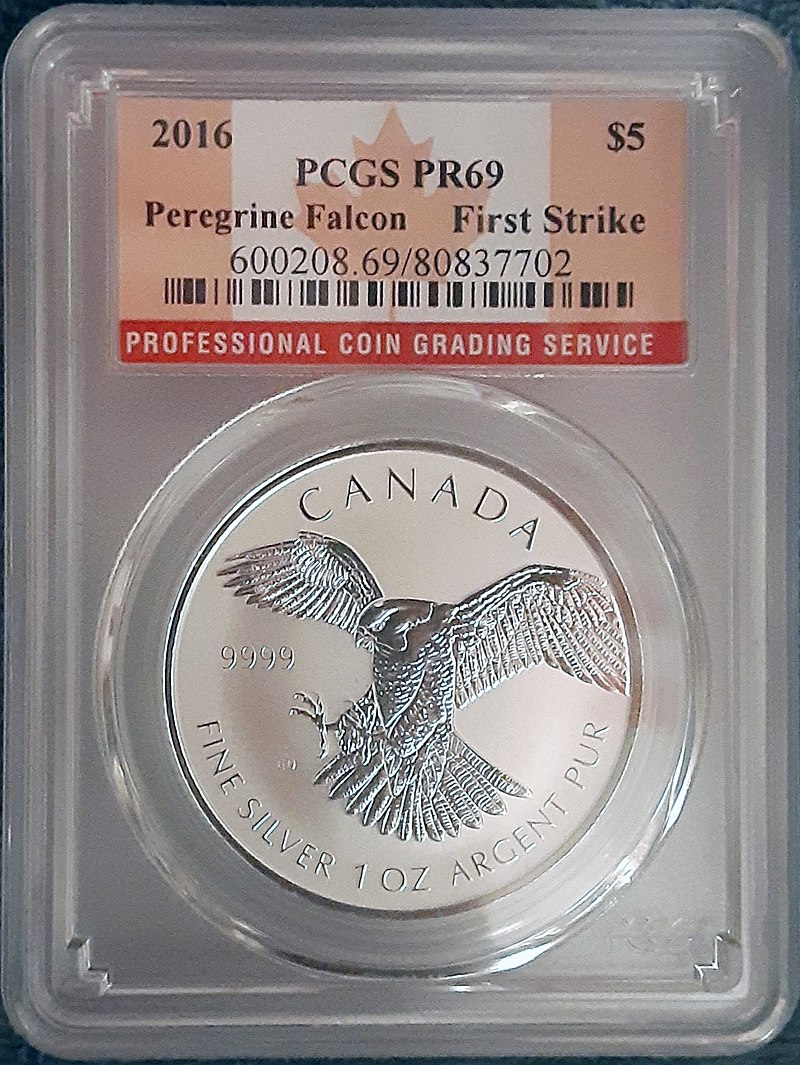 2024 · photos only
eBay and PCGS-style AI condition models grade a single coin's quality (MS 60–70 scale) from a photo — effectively zero sorting.
Justin Hinh's one-person arc — from a GPT-4 coin grader that sorted pennies, to a rebuilt autonomous sorting machine, to a v5 already leaning further into sorting.
Custom GPT-4 grader inside a ChatGPT. It started with pennies — identify them, then grade them. The whole arc began here.
Automated silver-coin sorting from circulation, built with accessibility in mind. Paused when AI still wasn't ready for it.
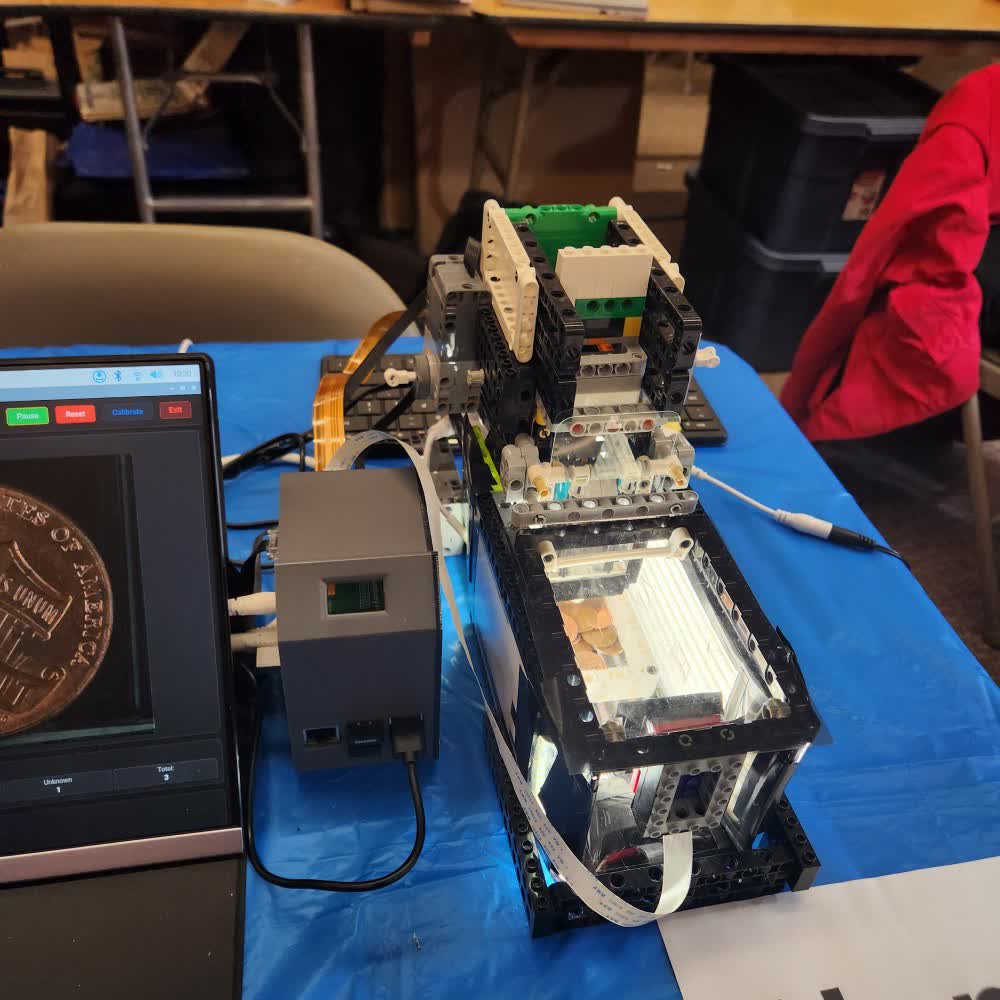
500-piece LEGO chassis, Raspberry Pi 5, ~14,000 lines of Python (Cursor), dual cameras, Gemini 2.5 Flash, sort-by-decade wheat pennies. Demoed at the ANA.
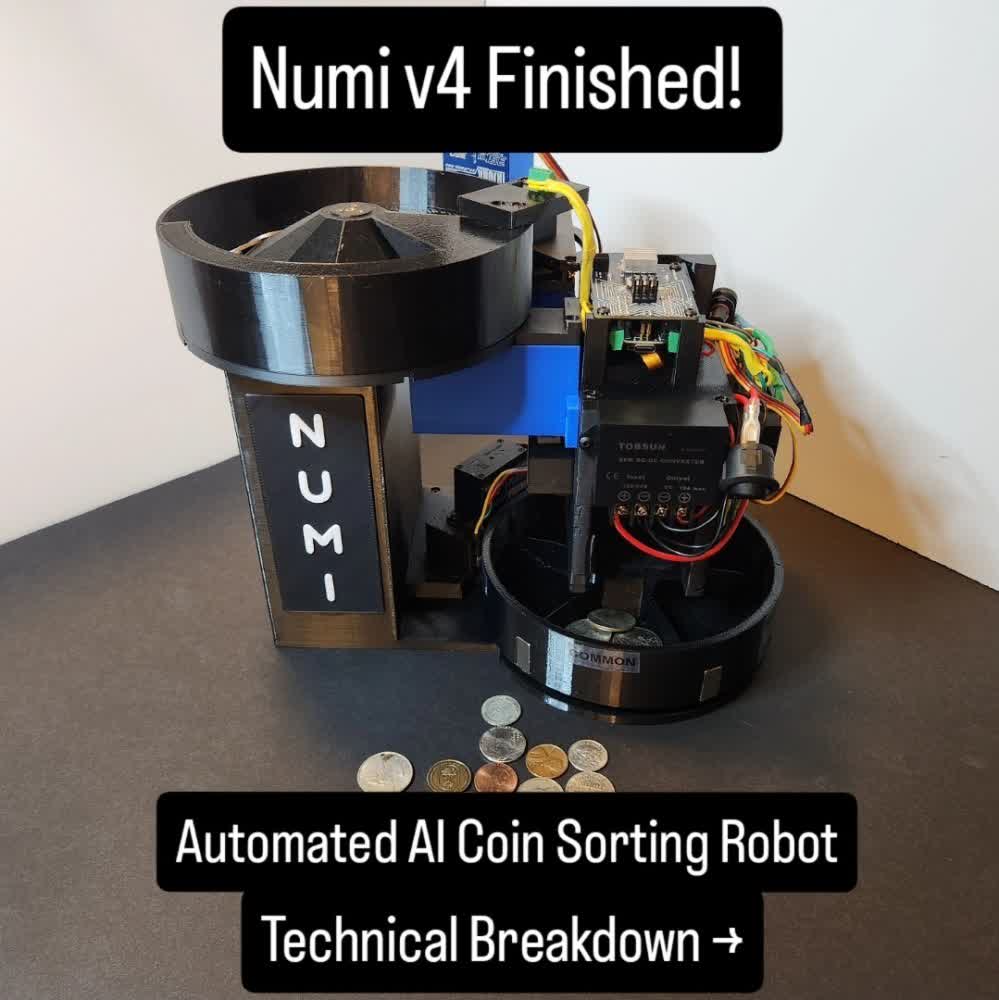
3D-printed frame, C++ on a micro-controller, laser-sensor hopper, 19-LED ring, one flipper + 5MP camera, plain-English Gemini verdicts, a browser carousel dropping into five bins (Dump/Save/Inspect/Misc/Retry).
| Product | On market since | Speed | AI engine | Cost | Status |
|---|---|---|---|---|---|
| RoboCoin (AI sorter) | proto 2023 · 50 units 2026 | <1 s/coin · thousands per hour | tens of onboard neural nets | ~$600 deposit, built to order | shipping gen-1, Poland |
| Numi v4 (Justin Hinh) | v1 2023 · v4 Aug 2026 | ~250–300/hr · ~10–14 s/coin | Google Gemini 2.5 Flash, cloud | ~$0.25 per 1,000 coins | one-man prototype, 5 bins |
| Numi v3 (LEGO + RPi 5) | June 2025 | ~240/hr · 15 s/coin · 5,000/day | Gemini 2.5 Flash, dual cameras | ~$6 per 10,000 coins | ANA Summer Seminar demo |
| Numi v1–v2 | late 2023 · 2024 | 60 s/coin (start) | GPT-4 grader → silver sorter | — | pennies first, then silver |
| CoinSnap (mobile) | ~2020 | manual · ~5–15 s/photo | cloud vision + value feed | freemium app | 10M+ installs |
| Coinoscope (mobile) | ~2017 | seconds per photo | reverse image search | free | active |
| eBay AI grading | 2024 | seconds per photo | grading model (MS 60–70) | free with listing | photos only — no sorting |
| Ryedale sorter | 2000s | ~50+ rolls/hr | none — metal signature | $500–900 | proven, pennies only |
Determined from watching both machines fail and stall — every lever below is a bottleneck one of them hit first.
| Efficiency lever | Who teaches us | The move |
|---|---|---|
| Denomination-first modular database | Numi feeds the full Gemini context window every coin | Pre-sort by denomination, then load only that denomination's slice of the licensed catalogue. Tighter context = faster verdict, cheaper tokens, and the AI spends its attention on year/mint/variety instead of "which of 300,000 globals is this?" |
| Two cameras — kill the flipper | Numi v4's single flipper arm weakens; after ~1 hour you have to go fix it | Dual fixed 5MP+ stations photograph both sides simultaneously. Halves the per-coin cycle and deletes the weakest mechanical part in the whole machine class. |
| Edge-first AI | Numi: every coin → Gemini Flash. RoboCoin: nets onboard, <1 s | Small on-device nets date/mint/denom the ~95% common coins in milliseconds at ~$0. The cloud LLM sees only the 2–5% candidates — thousands per hour at near-zero variable cost. |
| Light that never lies | Numi v4's 19-LED ring | Fixed geometry, diffuse ring + cross-light, matte backdrop, per-station calibration. Clean consistent pixels beat a bigger model on dirty, worn, greasy coins every time. |
03 · The Rarity Engine
Five detection channels run in parallel on every pass. Any one of them firing routes the coin out of the reject stream.
 CH.01 · KEY DATES
Low-mintage year–mint pairs are the bedrock of rarity. The database lookup scores each coin's mintage against its issue total and flags winners before the coin reaches the bin.
 CH.02 · DIE VARIETIES
The 1955 doubled die was found by someone staring. Pattern-matching against photographed die archives finds duplications, repunched mintmarks (RPM), and doubled dies at machine speed.
 CH.03 · MISPRINTS
The scanner's third point — weight, metal signature, edge profile — exists for exactly one reason: the coins the eye can't grade by looking.
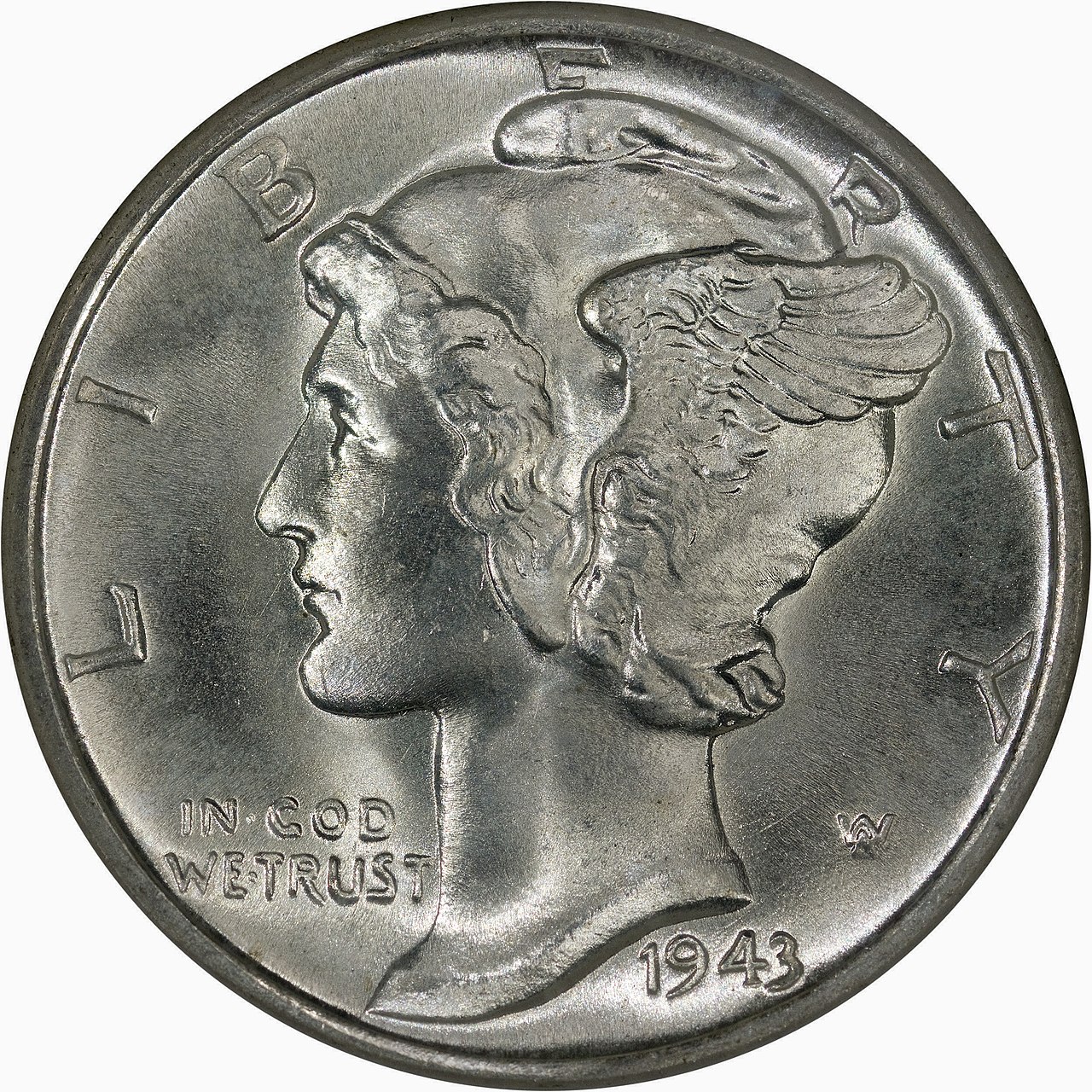 CH.04 · PRECIOUS METAL
Every pre-1965 dime, quarter, half, and dollar carries 90% silver. Metal-signature scanning pulls them by weight the same way the first AI sorters already do on camera.
 CH.05 · QUALITY
Like the quality-grading scanner setups, the same pass estimates condition (G → MS). Two identical key dates route differently: an MS example is worth ten times the worn one.
 CH.06 · ERA / DESIGN
Not every winner is a five-figure coin. Indian Head cents, buffalo nickels, standing liberty quarters, and even certain modern issues (2009!) have real premiums — and a fixed place in the hunt.
04 · The Database
The hard part of coin sorting was never the conveyor — it's the reference data: every design, mintmark, mintage, variety photo, and auction result. That's already been compiled, photographed, and maintained for decades, commercially. License it — a few thousand dollars a year instead of a data team for life.
The scanner queries the licensed layer at scan time; the verdict updates the moment a database revises a value, with zero maintenance on your side.
The largest free numismatic catalogue: 300,000+ collectible types worldwide with images, mintages, and composition — served through an official API.
License & API — no maintenance39,000+ U.S. coins with 700,000+ images, auction prices realized, and population data — the commercial standard for value lookup.
Commercial license + APIPhotographed die-variety libraries — tens of thousands of doubled dies, RPMs, and repunched dates as training + matching reference for channel B.
Reference images for AI trainingThe complete taxonomy of mint errors — off-centers, clips, wrong planchets, brockages — as structured labels for the edge/metal channel.
Taxonomy, not guesswork05 · The Economics
A scanner doesn't find you a 1909-S VDB every box — but it does convert every coin you touch into a checked, priced, routed decision. The odds below are community-reported ranges from coin roll hunting; the sliders let you use your own numbers.
Expected-value model
Odds & prices used: wheat cents $0.03 avg · pre-1960 finds $4 avg · silver coins $25 avg · key-date hits $500 avg, roughly 1 per 2,000,000 coins at normal luck — the kind of find that turns a year's sorting into a story.
06 · The Targets
Every entry below has been found in circulation — that's the whole point. Values are circulated-grade retail ranges from Coinflation / PCGS guides.


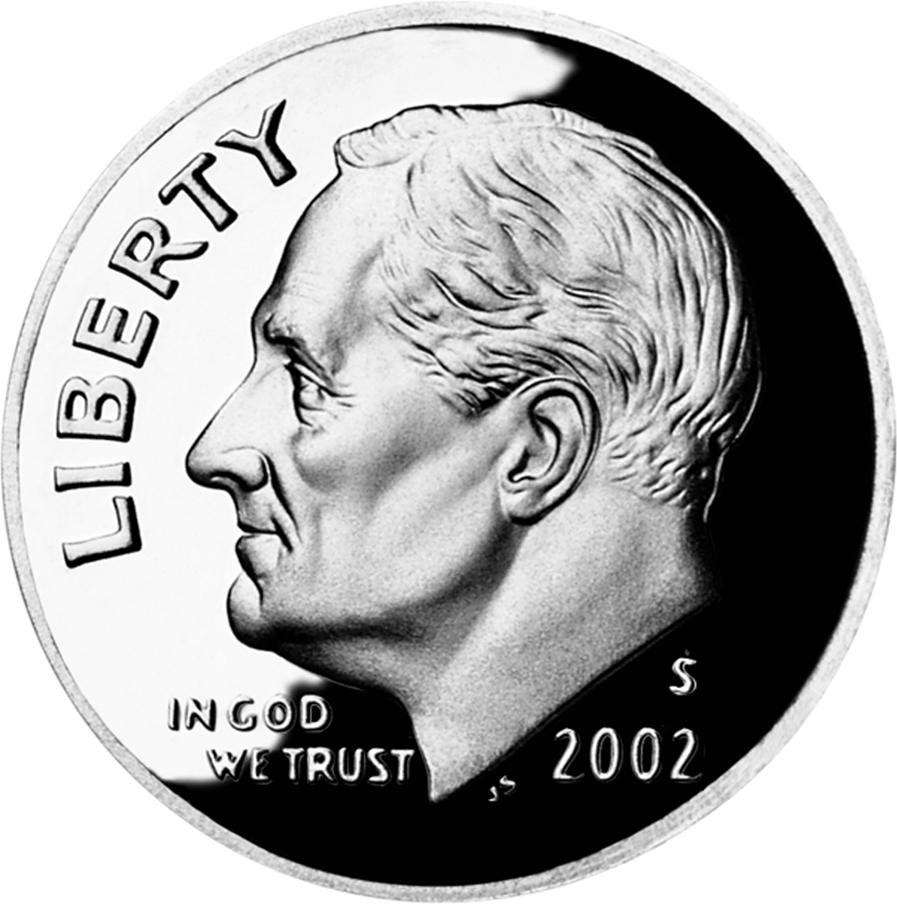
Each of these has been found in circulation — that's the whole point. In 1943, roughly 20 copper-alloy cents were struck by accident instead of steel; one sold at auction for more than a million dollars. The third scan point exists so the legends have nowhere left to hide.
Values are circulated-grade retail ranges per Coinflation / PCGS guides; auction records for the legends. The licensed database layer re-prices all of this continuously — the scanner never inherits a stale value.
07 · The Silver Bonus
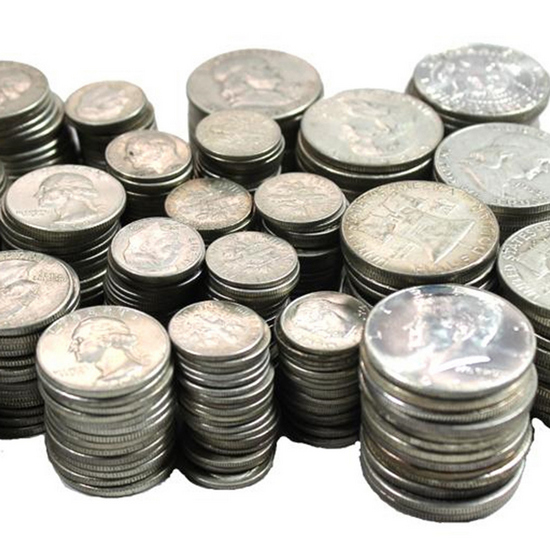
While the AI hunts key dates and errors, the same stations silently pull every 90% silver coin from your loose change — dimes, quarters, halves. These are some of the real finds waiting in plain sight.
 90% silver stack
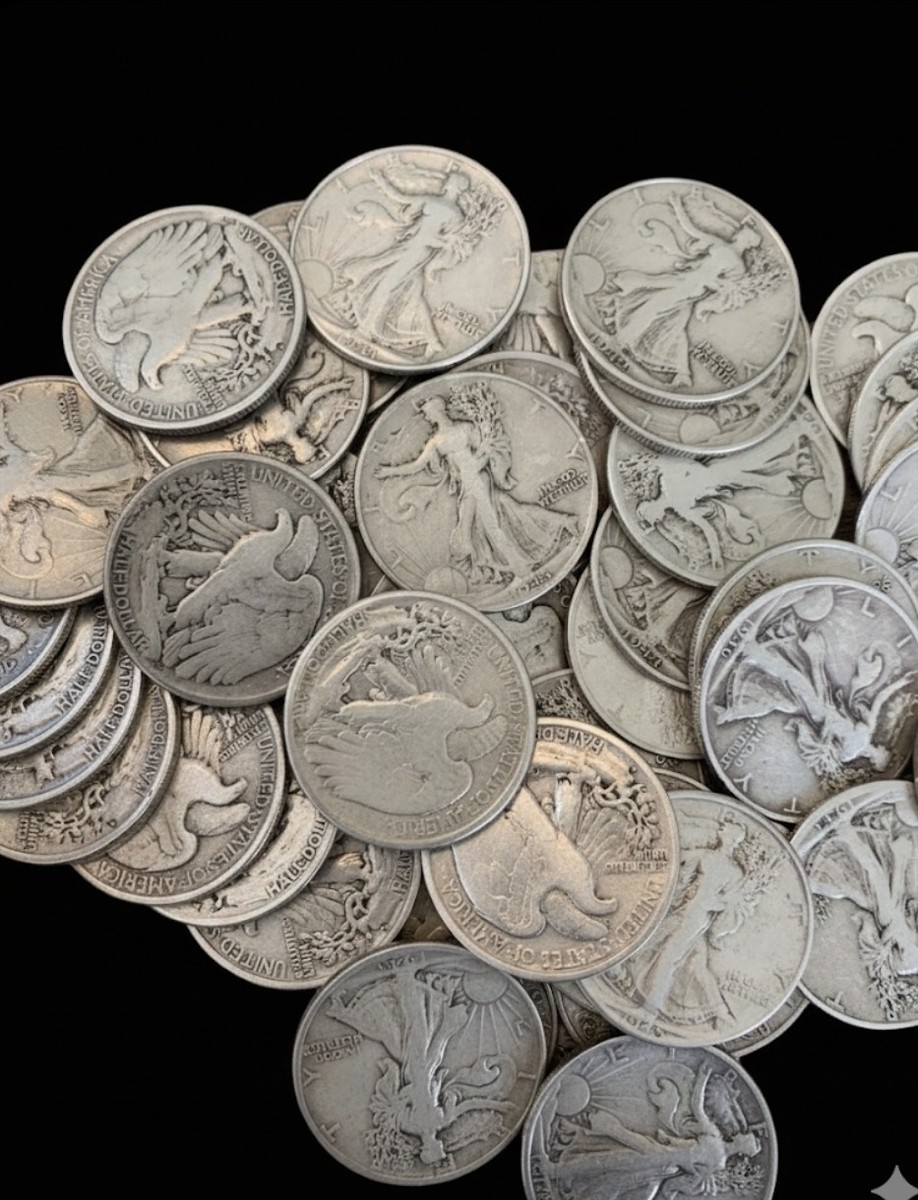 90% close-up
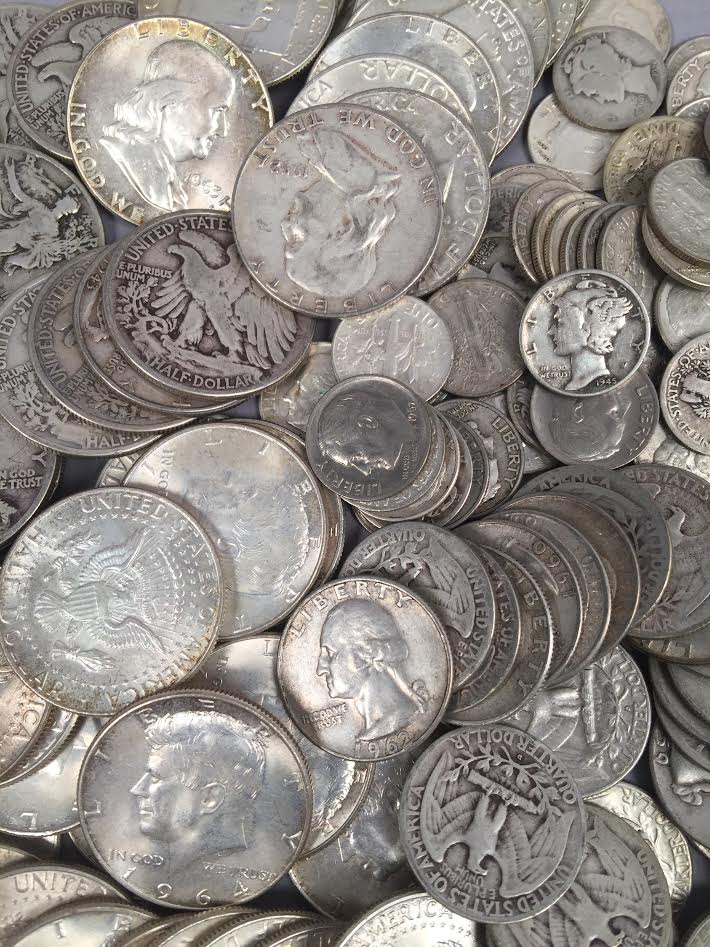 Pre-1964 set
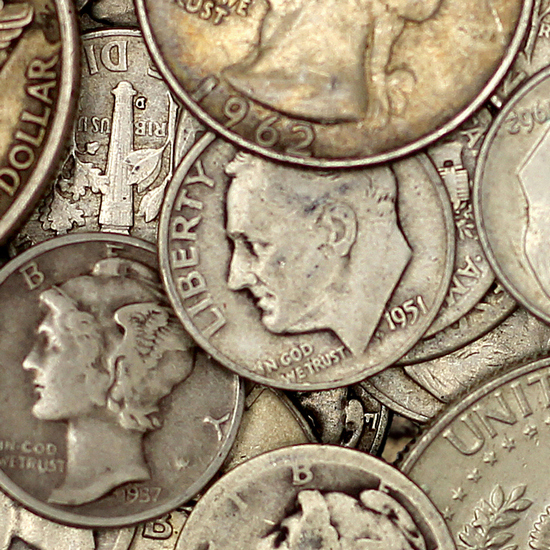 Silver close-up
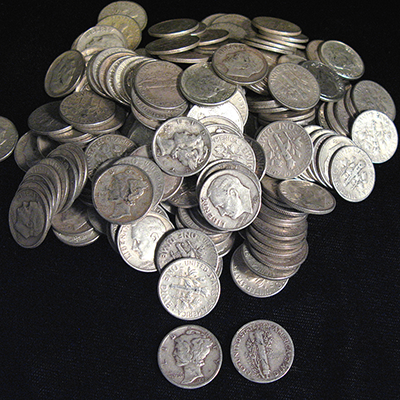 Silver dimes
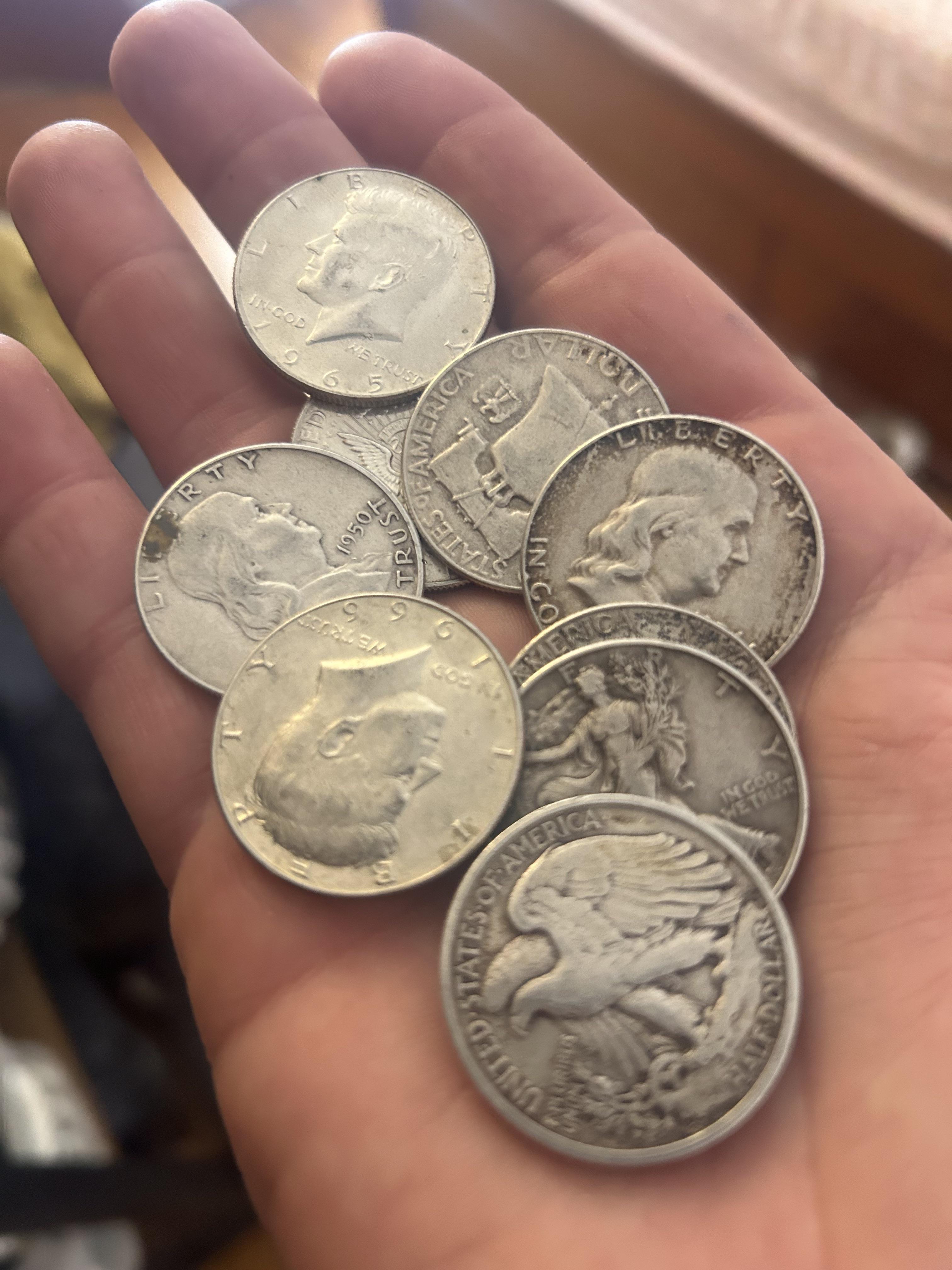 In hand
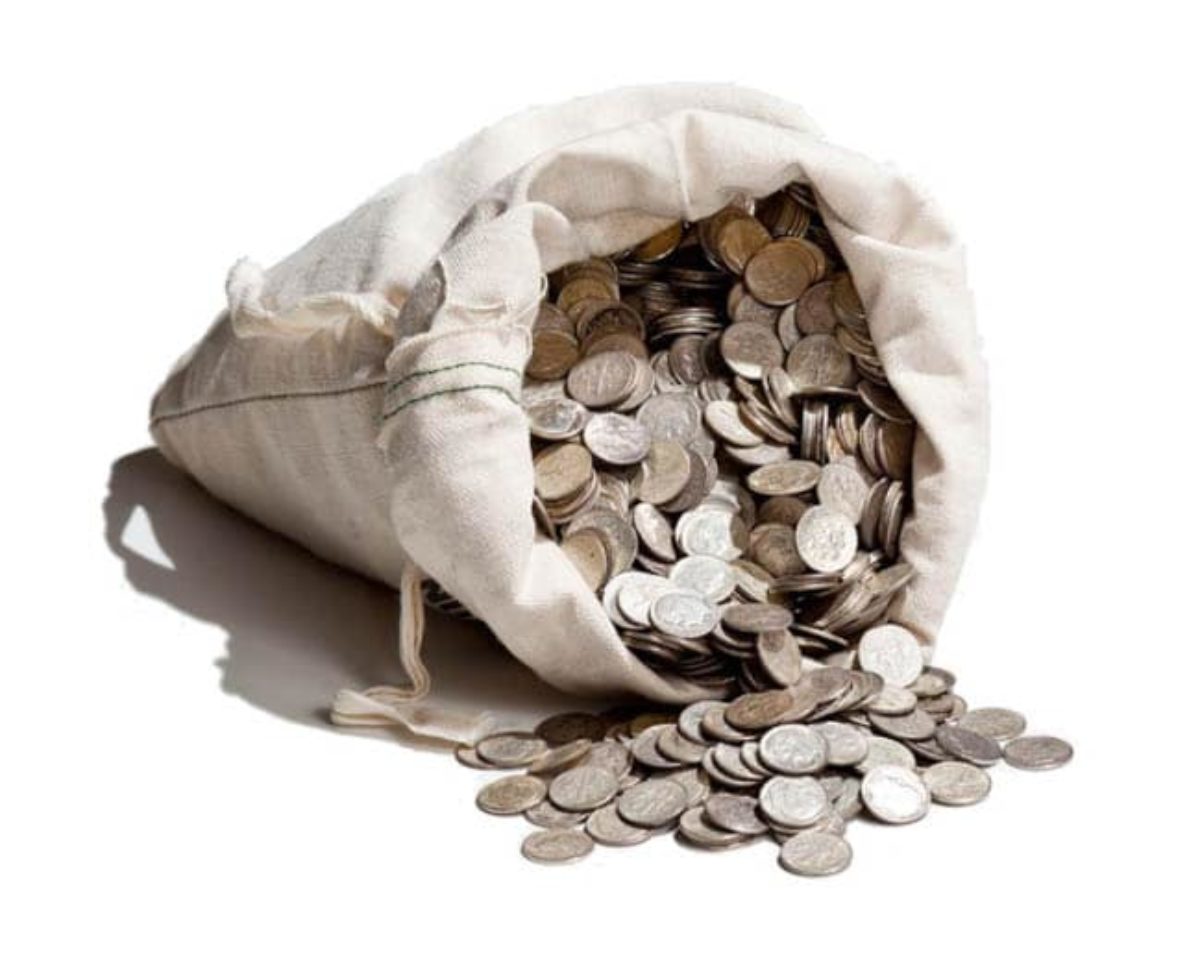 Spilling out
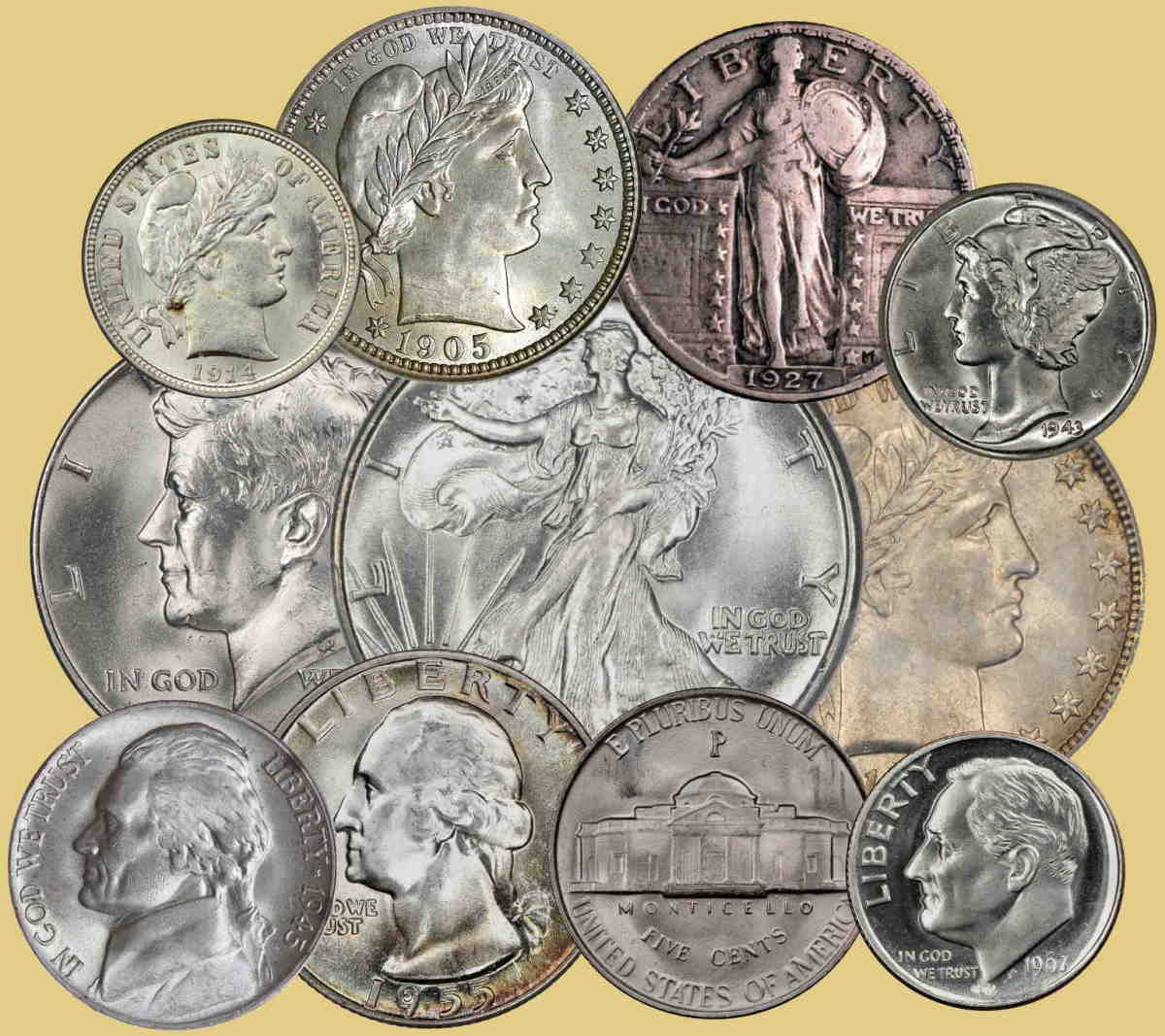 Junk silver
 Keeper stacks
Every 90% silver dime carries ~2.5 g of silver, quarters ~5.6 g, halves ~11.25 g — the third scan point (edge + weight) catches them by signature at machine speed. Spot price updates from the licensed feed; the scanner never inherits a stale value.
07 · The Playbook
What the machine does with everything that comes out of the hopper — and what you do next.
Bank boxes, estate jars, flea-market grabs, coin-store bulk bins, grandparents' dresser drawers. The scanner doesn't care about the source — only the coin. Hopper-fed, mixed denominations
Three stations read the obverse, the reverse and die details, and the edge/metal/weight. Every coin lands a confidence-scored verdict in under a second. <1 sec verdict · 3 scans
Key dates, errors, silver, and keepers each get their own bin. Common coins flood the reject chute back to the bank — untouched by human hands. 5 bins + verify overflow
The low-confidence overflow gets a 10-second human look (microscope, scale, magnet). This is also where the AI learns — every corrected call improves the next thousand. Human-in-the-loop feedback
Keepers get a quality read (G→MS estimate) and a live value from the licensed database — auction prices realized included — before they ever reach a tube. Value at scan time
eBay, coin dealers, collector forums, local shows. The scanner's verdict — year, mint, variety, grade, value — is the sales sheet. The data sells the coin
Rarity hits from the licensed database lookup
Varieties, misprints, off-centers, wrong metal
90% coins caught by weight & signature
Wheat, Indian Head, pre-1960, design semi-keys
Common circulation coins, back to the bank
Low confidence — 10 seconds of human eyes
Every human correction retrains the model
Your corrections teach the next scan pass
08 · FAQ
09 · Sources & References
Image credits: wheat cent & doubled-die & 1943 & Mercury dime & Indian Head cents — Wikimedia Commons, PD. RoboCoin & Numi v4 stills — public product-review videos (Quin's Coins, Dansco Dude, YouTube). Ryedale photo — pennysorter.com. Graded slab — Wikimedia Commons, CC BY-SA 4.0. Monogram tiles are placeholder art for the phone-app tier. RoboCoin facts from the public review video and site. 1909 wheat cent — PD · 1955 doubled die — PD & PD · 1943 copper cent — PD · Mercury dime — PD · Indian Head cent — PD. RoboCoin facts from the public review video and roboCoin.ai. Sounds like a plan — this is a concept site; machines are illustrative.